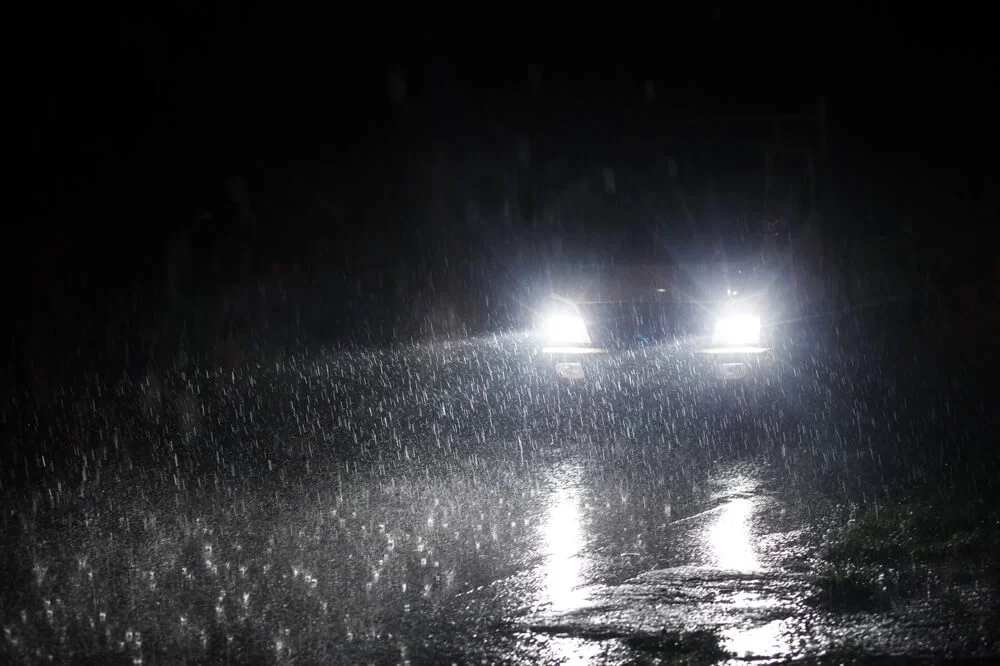
How Cruise Control Triggers Hydroplaning Skids
When driving on dry pavement, cruise control maintains a steady throttle. However, when your tires encounter standing water on a wet highway, a water wedge builds under the tire tread, causing the tire to lift off the road (hydroplaning).
When hydroplaning starts, your driving wheels lose traction and momentarily slow down. The cruise control computer detects this drop in speed and automatically opens the throttle to accelerate back to your set speed. This sudden surge of engine torque spins the free-floating tires, causing total loss of steering control and immediate vehicle spin-out.
What About Adaptive Cruise Control (ACC)?
Modern vehicles feature Adaptive Cruise Control (ACC) that uses radar, camera sensors, or LiDAR to follow the lead vehicle. While advanced, ACC systems are not designed for wet weather safety:
- Raindrops scatter radar signals and blur windshield camera sensors.
- ACC cannot measure road surface water depth or tire hydroplaning risk.
- Heavy spray from preceding trucks can trick ACC into sudden automatic emergency braking.
What to Do If You Hydroplane With Cruise Control On
- Disengage Cruise Control Immediately: Tap the brake pedal lightly or hit the CANCEL button on your steering wheel.
- Do NOT Slam the Brakes: Locking your brakes while floating on water prevents the tires from regaining directional grip.
- Keep Steering Straight: Hold the steering wheel firm until your tires cut back through the water to asphalt.
Visibility is your best protection against wet road hazards
Make sure your windshield wiper blades are fresh before driving in heavy rain.
Find Your OEM Wiper Sizes →