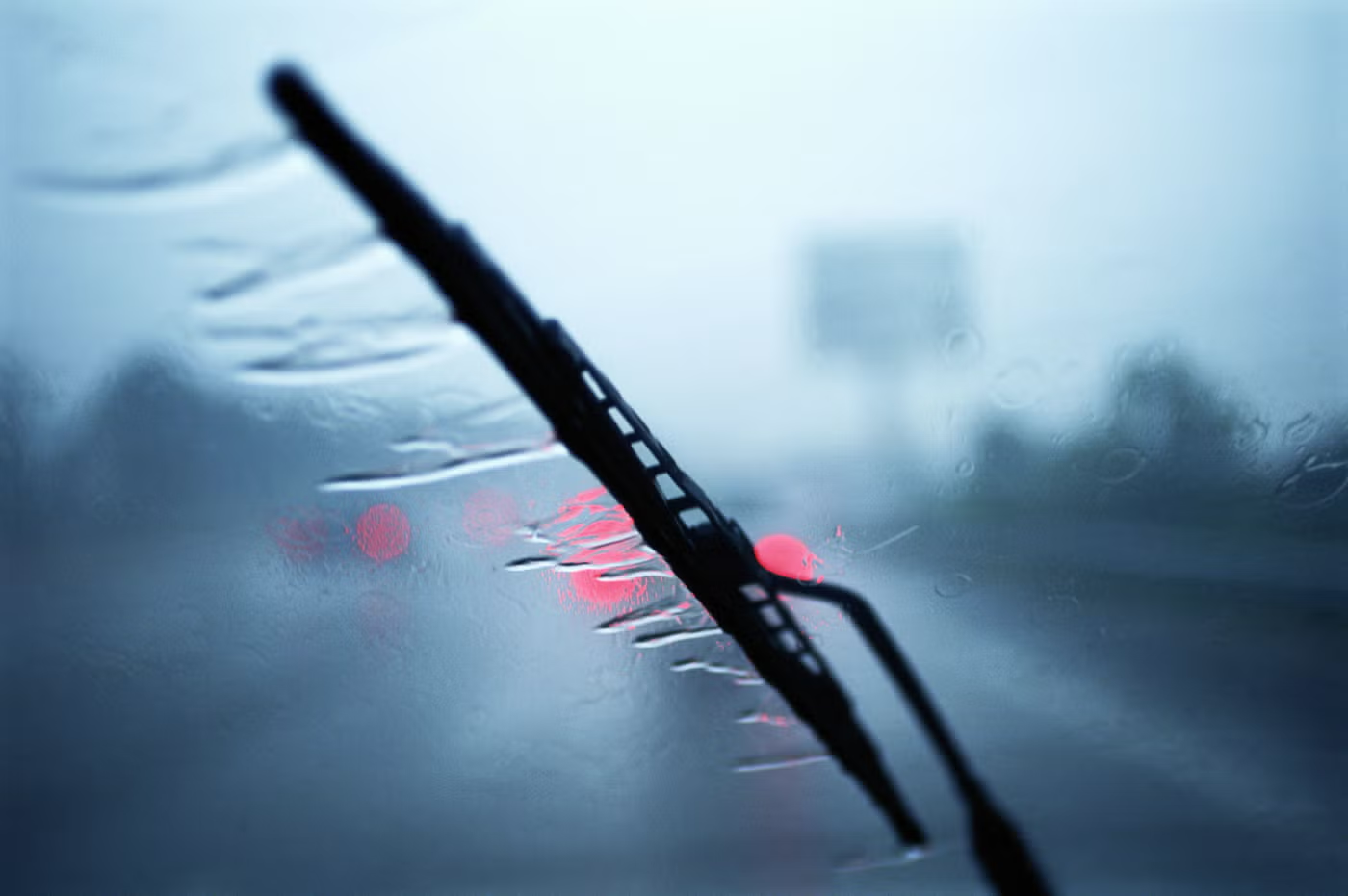
1. Why Night Rain Creates Blinding Glare
When water sits on your windshield, each individual raindrop acts as a tiny convex lens. When light from oncoming LED or HID headlights hits these water drops, the light scatters (refracts) in all directions, creating a blinding white haze across your vision.
2. Upgrade to Beam Wiper Blades for Night Driving
Standard framed wipers use 4 to 8 pressure points, leaving micro-gaps and chatter marks across curved windshields. Beam (bracketless) wiper blades feature a internal curved steel spring that maintains continuous, uniform pressure across the glass, wiping away micro-film that causes glare.
3. Clean the Inside of Your Windshield
Most drivers focus on the outside of the windshield, but off-gassing from dashboard plastics creates a invisible oily film on the inside glass. This interior film catches oncoming headlight glare and creates severe nighttime haze. Clean interior glass monthly with isopropyl alcohol or dedicated automotive glass cleaner.
4. Use the Right Side White Line (Fog Line) for Steering
When blinded by an oncoming vehicle with high beams on a dark wet road, do NOT stare into the headlights. Shift your gaze down toward the solid white fog line on the right edge of your lane to maintain lane positioning until the vehicle passes.
Ready to replace worn wiper blades?
Find exact OEM wiper sizes for your year, make, and model in seconds.
Find My Wiper Sizes →